

How I Failed 300 People in 25 Minutes (A Presenter's Confession)
Why audiences forget presentations and how to make yours unforgettable

I've been inconsistent with writing this newsletter lately because I've been traveling to speaking engagements at conferences. Each time I present, I have a ritual: I sit down afterward with my journal and do a thorough reflection on what worked, what didn't, and what I'd do differently next time.
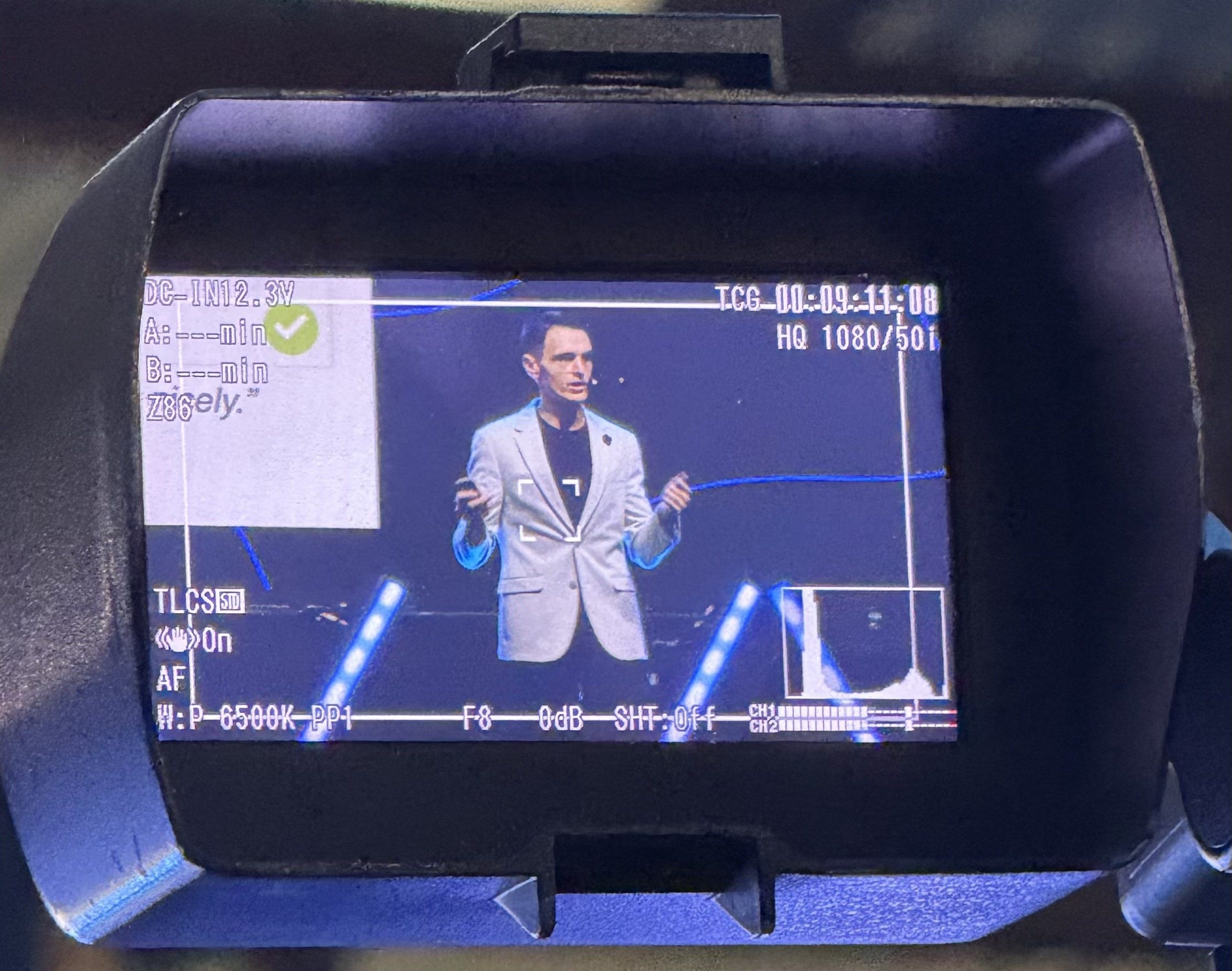
Last week's retrospective was particularly humbling. I had just delivered a brand new talk to a room full of design & product professionals. My delivery felt smooth, and the audience seemed engaged. People even came up afterward with compliments and follow-up questions. By all conventional measures, it was a success. But as I reflected on this talk, something felt off.
That's when it hit me. I had committed what might be the cardinal sin of presenting: I failed to identify and clarify my one big idea.
The audience left knowing I had shared information, but they couldn't articulate what they were supposed to do with it. I had given them a topic, not a transformation. Let me walk you through what I learned and how you can avoid making the same mistake.
Define Your Big Idea
Your big idea is the one key message that must stick. It's what compels your audience to change course, not just nod along. This isn't just information sharing; it's about creating a shift in thinking or behavior.
A strong big idea has two essential components:
Your point of view: This needs to express your unique perspective on a subject, not a generic statement everyone would agree with.
What's at stake: You need to convey why your audience should care about your perspective right now. This helps people recognize they need to act rather than continue with the status quo.
I find it helpful to express your big idea in a complete sentence with a clear subject and action verb. Using "you" as the subject highlights your audience's role, while strong verbs convey action and create emotional resonance.
When someone asks "What's your presentation about?" most people answer with phrases like "roadmap updates" or "user research findings." But those aren't big ideas; they're just topics with no point of view and no stakes.
Let's say you change "roadmap updates" to "Your team needs to update the product roadmap." You're getting closer because you've added your perspective, but the stakes still aren't clear.
Try this instead:
❌ Before: "Roadmap updates"
✅ After: "Your product strategy is failing because you're building for stakeholders instead of users."
❌ Before: "Design systems"
✅ After: "Your designers will keep recreating the same components over and over, costing you customers and credibility, until we build a shared design system that scales."
❌ Before: "Marketing attribution"
✅ After: "Your marketing spend will keep generating poor ROI until we track which channels actually drive qualified leads, not just traffic."
Notice how each example includes both your perspective and the consequences of ignoring it. You want people to feel slightly uncomfortable staying in their current position while showing them a clear path forward.
Generate Content That Supports Your Big Idea
Once you have your big idea clear, resist the urge to immediately open your presentation software. Slides force you into linear thinking, which isn't ideal for early brainstorming.
Instead, use physical tools like paper, whiteboards, or sticky notes. Generate as many supporting ideas as possible by:
Building on existing content: Take ideas you've already gathered and push on them. Challenge them from new angles. Draw unexpected connections between concepts.
Creating fresh content: Be curious and take creative risks. Let your intuition guide you toward interesting territory. Experiment with different ways to illustrate your point.
The key to successful brainstorming is suspending judgment. Write down seemingly unrelated ideas because they might lead somewhere brilliant.
Try this: Write your big idea at the center of a paper, then branch out with supporting concepts, examples, and evidence. Keep going until you have a messy web of interconnected ideas to explore.
Before you start building content, test your big idea with this simple exercise: Can you explain it to a colleague in 30 seconds and have them immediately understand both the problem and why it matters? If they respond with "So what?" or look confused, you need to sharpen your message.
You Don't Need to Be Original
Here's something I learned at my recent conference: I don't need completely original ideas to provide value.
At this event, dozens of speakers talked about AI over two days. Many covered similar ground, but some presentations were more compelling than others. The difference wasn't novelty; it was clarity and honesty.
Often there's tremendous value in saying something that's been said before, but saying it in a different way. Sometimes an outsider can get away with saying truths that insiders can't. Fresh perspectives on familiar topics often carry more weight than a team of expert insiders delivering the same message.
But you can't point this out explicitly. If I tell you I'm deliberately sharing ideas you've heard before because you need to hear them again, it sounds patronizing.
The truth is, well-expressed familiar ideas have surprising power in a world obsessed with novelty.
The Easiest Way to Be Interesting
The simplest way to capture attention is to be honest. Most people rarely say what they truly feel, yet this is exactly what audiences crave.
If you can speak a truth that most people are afraid to voice, you become compelling. Even if people disagree with your honest perspective, they'll find you interesting and keep listening.
This means stopping the hiding and posturing. Just tell the truth as you see it.
Speaking and writing are natural consequences of loving ideas. History remembers great thinkers because they either spoke or wrote about their ideas, or someone else captured their work.
Expression is often the only way to fully understand your own ideas and discover what you really think. It makes learning from others' criticism possible. I'm willing to look foolish if it means learning something I wouldn't have discovered otherwise.
What This Looks Like in Practice
Let me give you a concrete example. Instead of a generic presentation about "improving team collaboration," a big idea might be: "Your remote team is failing because you're trying to replicate in-person workflows instead of designing for distributed work."
That statement immediately creates tension. It challenges assumptions. It makes people think "Wait, are we doing that?" and forces them to examine their current approach. Then your entire presentation becomes about proving this point and showing a better way forward.
The content practically writes itself once you have that strong foundation.
Anticipate the Pushback
As a presenter, you're asking people to change their beliefs or behavior. That's uncomfortable, so every audience will resist somehow.
Think through how they might push back and plan accordingly:
Logical resistance: Can you find reasonable arguments against your perspective? Research opposing viewpoints through articles and reports that challenge your stance. This prepares you for skeptical questions and helps you develop a more nuanced understanding.
Emotional resistance: Does your idea challenge deeply held beliefs or moral codes your audience values? Acknowledge these feelings and address them with empathy.
Practical resistance: Is what you're asking difficult to implement? Acknowledge the real sacrifices people would need to make and show how you're sharing some of that burden.
You can address concerns before they become mental roadblocks. For example, share at the beginning that you were initially skeptical until you examined the data more closely. Or meet with tough critics in advance to test your ideas.
If you're struggling to identify opposing viewpoints, share your big idea with trusted colleagues and ask them to challenge it.
The Bottom Line
My conference talk could have improved because I gave my audience information without transformation. I shared what I knew without clarifying what they should do about it.
Don't make the same mistake. Start with your big idea, support it with compelling content, and prepare for resistance. Your audience will thank you for giving them clarity instead of just another presentation to sit through.
The best presentations don't just inform; they transform. And transformation starts with one powerful, uncomfortable truth that your audience can't ignore.
📩 Like this piece?
If you're into communication that actually moves people and storytelling that gets results in real-world business settings, subscribe to get practical insights like this.
Know someone preparing for an important presentation or talk? Share this with them.
Good luck and be patient with yourself.
-Rinaldo
Very thought-provoking! I loved the contrast between a topic versus an idea (or better yet, a push to change...). And I completely agree that honesty beats polish every time. I once heard two back-to-back presentations at a women's event. The first was by a very intelligent Stanford student who spoke in elegant phrases. And the second was by a mom who told a hilarious and very embarrassing personal story about having to nurse a baby in the middle of a house closing document signing. I think it's obvious which one kept us riveted in our seats...